
India's market regulator is moving ahead to include real estate investment trusts (Reits) in benchmark indices in a phased manner, Sebi chief Tuhin Kanta Pandey said, while asserting that the regulator was working to strengthen the link between infrastructure building and the markets.

Bangladesh's newly-elected Prime Minister Tarique Rahman pledged to strengthen the rule of law and ensure the country is a safe land for people of all faiths, while also addressing corruption and improving law and order.

In a world fractured by uncertainty, India stands out for its policy consistency, paired with sustained ambition, points out Pritam Banerjee.

The fiscal tilt towards capex benefits companies in investment-related sectors like capital goods, defence equipment, engineering & construction and metal & mining. The planned cut in revenue expenditure will weigh on companies in consumption sectors like FMCG, consumer durables and retail.

Sustaining 8 per cent-plus growth rates is necessary if we are to reach high-income status by 2047, points out Amitabh Kant.

Prime Minister Narendra Modi stayed calm, avoided public confrontation, and focused on India's long-term interests to steady ties with the United States.

For now, Yumnam Khemchand Singh's leadership will be judged not by promises or symbolism, but by whether his government can prevent further violence and begin the slow, difficult work of rebuilding trust.

Mirroring the traditional hawala system, where money is sent through non-banking channels, this digital version uses the anonymity of unregulated cryptocurrency to erase the financial trail and inject cash into the domestic economy.

The Union Budget for 2026-27, presented by Finance Minister (FM) Nirmala Sitharaman on Sunday, which was a first, had an excellent domestic macro backdrop. According to the first advance estimates, gross domestic product (GDP) in constant prices is projected to grow 7.4 per cent in the current financial year, against 6.5 per cent in 2024-25.

Foreign investors pulled out Rs 17,955 crore (Rs 2 billion) from Indian equities in the first two weeks of this month, taking the total outflow to Rs 1.6 lakh crore (Rs 18.4 billion) in 2025.' This sharp withdrawal follows a net outflow of Rs 3,765 crore in November, extending the pressure on domestic equity markets.

The move came against the backdrop of Turkiye backing Pakistan and its condemnation of India's strikes on terror camps in the neighbouring country and Pakistan-occupied Kashmir under Operation Sindoor.
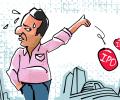
India's equity markets may have expanded rapidly, but initial public offerings (IPOs) are increasingly becoming exit vehicles for early investors rather than as engines for raising long-term capital, a shift that undermines the spirit of public markets, Chief Economic Advisor V Anantha Nageswaran warned on Monday at a CII event.


The banking sector could see better loan growth in the third quarter of financial year 2026 (Q3FY26) with improved net interest margins (NIMs), though the full impact of latest rate cuts will be largely felt in the fourth quarter. There may be lower slippage in unsecured loans and microfinance institutions (MFIs) along with steady recovery trends, which should lower credit cost.

Public sector banks have written off loans worth Rs 6.15 lakh crore in the last five and a half years, Parliament was informed on Monday.

'If you align your ambition with India's rise, the peak of your careers will unfold alongside the peak of India's power.'
Stay orders keep law out of citizen access even years after CIC rulings on opening market institutions to scrutiny

The strong domestic flow offset selling by foreign portfolio investors who pulled out $23.3 billion (Rs 2.03 trillion) from domestic equity markets in CY25.
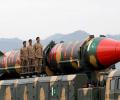
After Donald Trump became president of the United States, he unleashed economic weaponisation, upsetting the old world order, leading to much unrest. If that wasn't all, the threat of an imminent nuclear war was issued by the US, Russia, China, North Korea and Pakistan. In today's fractious times, Dr Paulos Mar Gregorios would have made a dent, notes His Holiness Baselios Marthoma Mathews III.

'Don't look at Russia only as a place to earn quickly and then leave.' 'Try to build experience in serious companies, skills and certifications that will serve you anywhere in the world.'

Banks have tightened their cyber security network to ward off any cyber threat in the wake of India launching missile attacks on Pakistan and Pakistan-occupied Kashmir. Banks have also improved their security at the branches near border areas due to heightened threat of a counter attack.
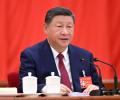
If Xi Jinping is dethroned in the future, the instrument for that may well be embedded within the PLA, notes former foreign secretary Shyam Saran.

'The (Maoist) organisation is in visible decline. Their senior leaders are ageing. Forest life is unforgiving -- older leaders simply cannot cope physically.' 'Earlier, they attracted educated youth from cities. That stream has dried up. Today's recruits largely come from poor village backgrounds and lack ideological depth.'

Retail investors have been the hardest hit in the recent market downturn, with stocks where they hold over 20% falling 45% from their 52-week highs.
Capital market regulator Securities & Exchange Board of India on Tuesday announced its plans to set up a national securities institute for upgradation of skills of financial intermediaries.

The enduring relationship between the two countries have survived the disintegration of the erstwhile USSR in 1991, the end of the Cold War and the regime change in both countries, points out Rup Narayan Das.
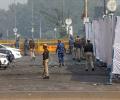
The police suspect the recces were part of a larger conspiracy to target the historic monument on January 26, which might have failed due to intense patrolling in the area at the time.

Authorities relaxed the curfew in Leh, Ladakh, allowing markets to reopen after week-long restrictions following violent clashes. The situation is gradually returning to normal with increased security measures.

'Political protection allow groups to recruit, rearm and operate with reduced operational pressure. That increases their bargaining power and their ability to destabilise.'
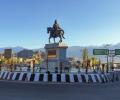
Terming the charge that Wangchuk incited the violence in Leh as 'misplaced', she claimed that he has been protesting in the "most Gandhian way possible" and the "situation escalated" on September 24 due to the actions of the CRPF.

Finance Minister Nirmala Sitharaman on Friday said the world is facing "profound imbalances" in trade and energy security, and is undergoing a structural transformation, with India standing out as a 'stabilising force' that can withstand external shocks.

Amid US-China trade tensions and economic vulnerabilities, India must seize the 'China +1' opportunity, deepen reforms, secure FTAs, and globalise its firms for long-term growth, suggests Ajay Shah.
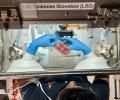
The $1.2 billion in-space manufacturing market is expected to grow and be worth more than $20 billion by 2033.

Yes, the entry of private bankers, particularly with global experience will add value to PSBs, points out Tamal Bandyopadhyay.

'You cannot 'clear' your way to peace.' 'You need intelligence, calibrated force, impartial law enforcement, political neutrality, humanitarian returns and a sustained reconciliation plan.'

Can change happen? Not unless the changemakers themselves want it since they benefit the most from the status quo, warns Biswajit Dasgupta.

Investors should avoid making drastic changes to their asset allocation during a market correction.

The Securities and Exchange Board of India (Sebi) is set to introduce key reforms aimed at facilitating smoother mega initial public offerings (IPOs). Key among the proposals is a reduction in the quota reserved for individual investors - those applying for less than Rs 2,00,000 per application - from the current 35 per cent to 25 per cent for large IPOs (issue size above Rs 5,000 crore).

Moreover, Ravi Narain and Chitra Ramkrishna -- who had served as MD and CEO of the exchange -- have been asked to disgorge 25 per cent of respective salaries drawn during a certain period.
 © 2026 Rediff.com - Advertise with us - Disclaimer - Privacy Policy - Sitemap - Feedback - About us - Terms of use - Grievances